

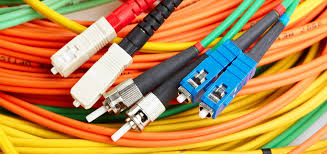
Beneath our city streets, snaking across ocean floors,fiber optics and woven through the walls of our homes, flows an invisible river of light. This river carries our emails, our video calls, our financial transactions, and our entertainment at speeds approaching 300,000 kilometers per second. It is the backbone of the modern digital age, and its name is fiber optics—a technology that transformed glass threads into the most powerful communication medium in human history. More than just cables, fiber optics are the fundamental architecture of our global consciousness, enabling the instantaneous exchange of information that defines 21st-century life.
The principle behind fiber optics, known as total internal reflection, is surprisingly elegant. At its core, an optical fiber is a strand of incredibly pure glass, thinner than a human hair. This glass core is surrounded by a layer of cladding with a lower refractive index. When light enters one end of the core at a sharp enough angle, it doesn’t leak out; instead, it reflects off the boundary between core and cladding, bouncing its way down the entire length of the fiber like a pinball of photons. This allows light signals to travel vast distances with minimal loss of strength, especially when the light source is a coherent beam from a laser. These signals are not just “on” or “off”; by modulating the light waves, we can encode vast amounts of digital data—billions of bits per second—into pulses of colored light.
The journey from concept to global ubiquity was one of persistent innovation. Guiding light for illumination, as with early bent glass rods, has been understood for centuries. But the true breakthrough came in 1966, when Charles Kao theorized that impurities in glass, not a fundamental flaw in physics, were what was attenuating light signals. His work, which earned him a Nobel Prize, pointed the way to ultra-pure glass. The subsequent development of low-loss optical fiber in the 1970s coincided perfectly with the invention of efficient semiconductor lasers and light-emitting diodes (LEDs) to send the signals, and sensitive photodiodes to receive them. This trinity of components—pure fiber, compact light sources, and reliable detectors—made optical communication commercially viable.
The impact was nothing short of revolutionary. Long-distance telecommunications were the first domain to be transformed. Compared to the bulky, interference-prone copper cables and microwave relays of the mid-20th century, fiber offered staggering advantages: immense bandwidth (the ability to carry hundreds of separate wavelengths, or channels, on a single strand via Dense Wavelength Division Multiplexing), minuscule signal loss (enabling stretches of over 100 km between amplifiers), and immunity to electromagnetic interference (no more crackle from passing power lines). By the late 1980s, transoceanic fiber cables began to replace satellite links for telephone traffic, offering lower latency and far higher capacity. These submarine cables, armored against sharks and ship anchors, became, and remain, the unsung heroes of the global internet, carrying over 99% of all international data.
As the internet exploded in the 1990s and 2000s, fiber became its indispensable circulatory system. The backbones of the internet—the long-haul routes between cities, countries, and continents—are almost exclusively fiber. This “long-haul” network is fed by “metro” and “access” networks. Here, the story bifurcates. For businesses and data centers, direct fiber connections (Fiber-to-the-Premises or FTTP) became the gold standard, offering symmetrical gigabit speeds for both upload and download. For the home, the rollout has been slower and more costly, leading to variations like Fiber-to-the-Curb (FTTC), where fiber runs to a neighborhood node, with older copper completing the “last mile.” The global push for full FTTP, driven by demands for high-definition streaming, cloud gaming, and telecommuting, continues to be a major infrastructure priority.
The applications of this light-based technology extend far beyond carrying Netflix and Zoom calls. In medicine, bundles of ultra-thin fibers form the core of endoscopes and arthroscopes, allowing surgeons to see and operate inside the human body through tiny incisions, revolutionizing minimally invasive procedures. In engineering, fibers embedded in composite materials for aircraft or bridges can act as sensors, detecting minute strains or cracks by measuring changes in the light traveling through them—a nervous system for man-made structures. In the realm of defense and industry, their immunity to interference makes them ideal for secure communications and for use in volatile environments like oil refineries or nuclear facilities.
Furthermore, the rise of fiber has been the critical enabler for the technologies we now take for granted. The cloud—the vast, distributed network of remote servers storing our data and running our applications—is fundamentally a constellation of massive data centers interconnected by a web of fiber optic lines. The rollout of 5G wireless networks is equally dependent on it; each cellular tower requires a high-capacity fiber “backhaul” connection to handle the torrent of data from thousands of smartphones. Even the futuristic promise of quantum communication, with its potential for unbreakable encryption, relies on specialized fiber networks to transmit quantum states over distance.
Yet, the fiber optic revolution is not without its challenges and frontiers. The “last mile” problem—the high cost of physically connecting every home and business—leaves a digital divide, with rural and low-income areas often underserved. Researchers are also pushing against the theoretical limits of current fiber, developing new types like hollow-core fiber, which guides light through air, potentially reducing latency and increasing data rates even further. The goal is to keep pace with the world’s insatiable appetite for data, driven by artificial intelligence, the Internet of Things, and immersive virtual worlds.
From a shimmering concept in a physics lab to the literal foundation of global connectivity, fiber optics have reshaped our civilization. They shrank the world, accelerated knowledge, and created new forms of community and economy. They are the silent, luminous threads weaving together the fabric of our digital existence, proving that sometimes, the most powerful currents are those we cannot see, carrying the future on beams of light. As we stand on the cusp of further breakthroughs, one truth remains evident: the information age is, and will remain, an age of light.